We specialize in delivering high-quality CNC components and linear motion products for industrial needs.

info.anptechnoslides@gmail.com
70134 50128

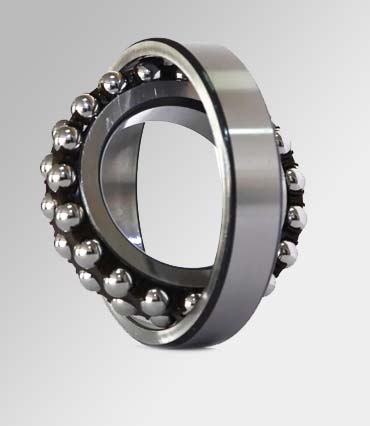
Self Aligning Ball Bearing.

Self-Aligning Ball Bearings are designed to accommodate misalignment between the shaft and housing without compromising performance. They feature two rows of balls and a spherical outer ring raceway, which allows the inner ring to tilt freely while the outer ring remains fixed. This unique design ensures smooth rotation even if the shaft is slightly misaligned, reducing stress and wear on the bearing.

  • Highlights
  • FEATURES
  • APPLICATIONS

These bearings are particularly suitable for applications where shaft deflection, mounting errors, or housing flexing might occur. Their ability to handle radial loads and moderate axial loads in both directions makes them versatile, while the self-aligning feature ensures long service life and reliable operation under varying conditions.

  • Self-Aligning Design – Compensates for angular misalignment between shaft and housing.
  • Double Row Ball Configuration – Enhances load-carrying capacity and stability.
  • Spherical Outer Ring Raceway – Allows smooth tilting of the inner ring.
  • Handles Radial and Axial Loads – Supports combined load conditions efficiently.
  • Low Friction & Smooth Operation – Reduces wear and energy loss.
  • Durable Construction – Resistant to deformation and suitable for heavy-duty applications.

Self-Aligning Ball Bearings are widely used in industrial machinery, conveyors, textile machinery, and agricultural equipment, where shaft misalignment is common. Their ability to maintain smooth rotation under angular deviations makes them ideal for fans, pumps, and electric motors.

These bearings are also applied in gearboxes, mining machinery, and construction equipment, where they provide reliable performance under combined radial and axial loads. Their self-aligning capability, durability, and low maintenance make them a preferred choice for equipment that experiences deflection, mounting errors, or vibrations during operation.